The EPA
“Many people want to pass right now, please stay in line.”
— Common bumper sticker on EPA tractors
The EPA-tractor: from farming to a teenage room on wheels
Today, teenagers all over Sweden drive around in so-called EPA-tractors. They are often decorated individually and have impressive sound systems. Almost 100 years after they were invented, they are still controversial in the eyes of adults in 2026. What is a small subculture today actually started in farming.
In the early 1900s, the Ford Model T became the first mass-produced car. In the decades that followed, tractors developed in a similar way and also started to be mass-produced. They were still expensive and out of reach for many farms. To make sure the gap between farms with and without motorised equipment did not grow too big, some people invented something between a car and a tractor. Officially it was called a “motor tool”, but people quickly started calling it an EPA-tractor. By this point, the earliest cars had almost gone through a full life cycle, so they were cheap to get hold of. And even a second-class tractor was much better than walking behind a horse with a plough in your hands.
The name EPA was an unofficial name taken from a newly opened low-price store. The low-price store was something completely new in Sweden and was loved by consumers, but it was no secret that the low price came with lower quality. Many traditional shops protested, and a government investigation was carried out in 1934 to look into whether the traditional shops should be protected in some way. No special law came out of it. EPA stores spread across all of Sweden, and the slang word for the home-built tractors on farms spread just as quickly, in the same way that we today might say that something is a “Temu version”.
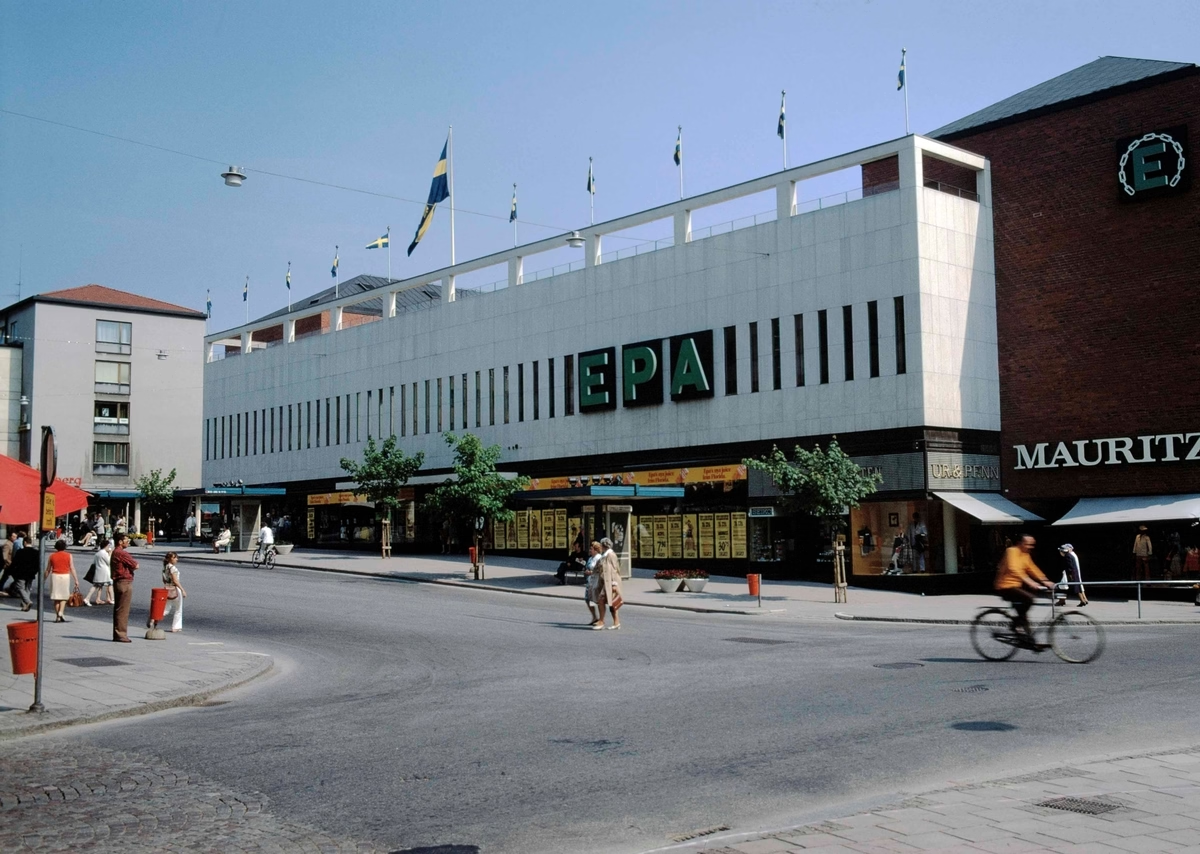
The EPA department store, which became synonymous with low-priced products and gave its name to the home-built tractors.
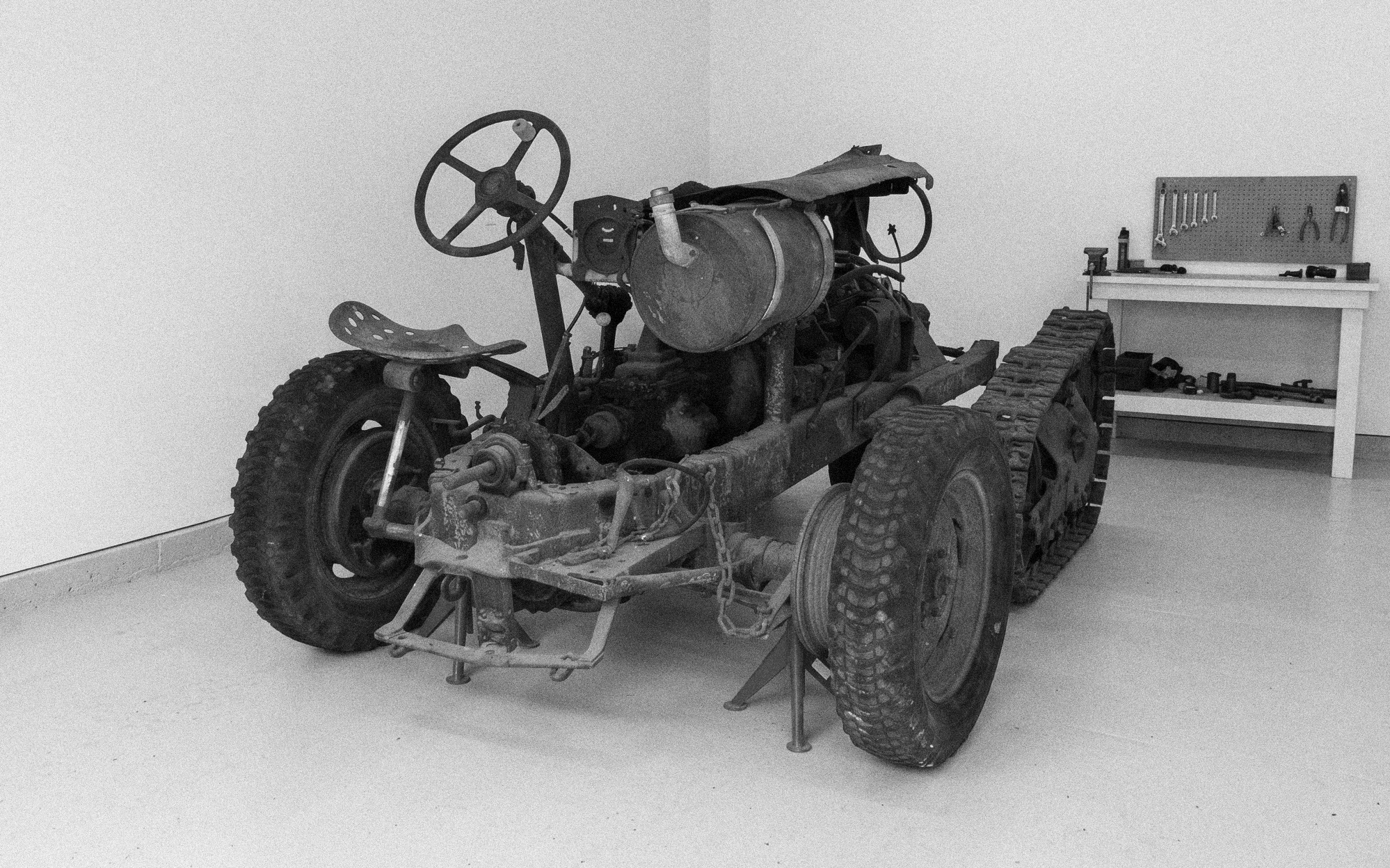
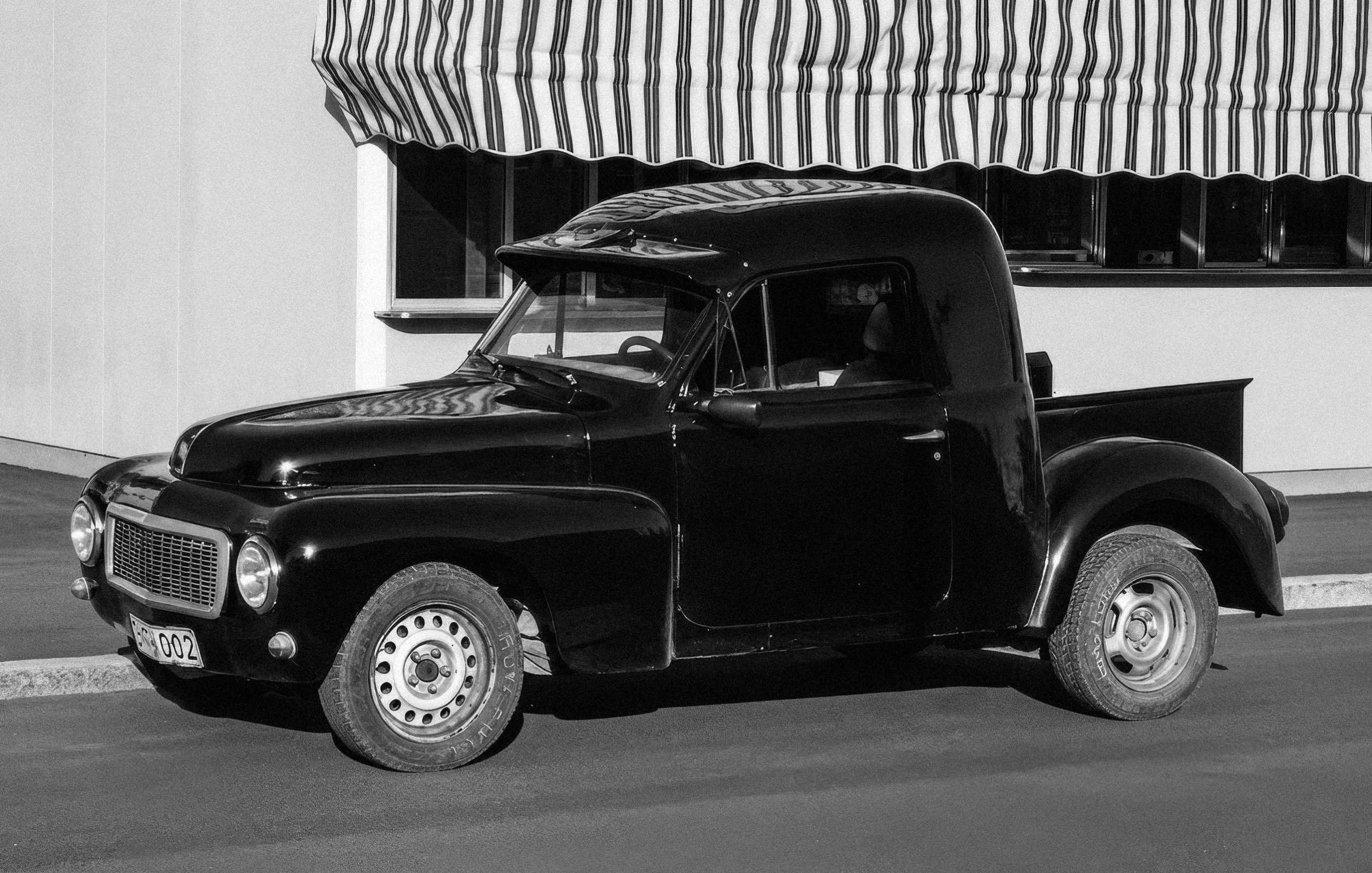
One of the earliest EPA tractors that was frankensteind together from multiple cars.
Since children and young people had helped out on farms ever since farming began, there was no age limit for driving a motor tool on your own land. When an age limit and a special driving permit were introduced in 1952, it was only for people who needed to move a tractor on a public road between fields. So it was the road that was regulated, not the vehicle.
As tractors became cheaper, the EPA-tractor lost its purpose, and it collected dust on many farms. In the 1950s, car culture exploded in Sweden, and young people without a driving licence quickly noticed the loophole: with a tractor licence, you were allowed to drive a tractor on the road already at age 15. The EPA-tractors in the barns got a new life. The definition of a tractor was mostly about performance, so it was possible to rebuild cars to meet the requirements while they still looked like a kind of car. The law, which was meant for occasional trips between fields, now became a taste of the car culture that you could fully take part in three years earlier.
The EPA culture grew mainly in the countryside for several reasons:
There were tractors available that already met the requirements or were easy to rebuild.
The knowledge of working on cars and tractors existed here for natural reasons.
The need to travel is greatest here. In the countryside, we have long distances and extremely limited public transport.Here in the north it can also be minus 35 degrees Celsius in winter. For many young people, the EPA-tractor is the only way to meet friends without freezing.
In the USA, the cruising culture already existed, but there you were allowed to drive a car from age 16, so there was no point in finding loopholes. The EPA culture therefore felt similar to car culture, but over time it became its own thing. You could buy a shortcut into the cruising culture, but the EPA-tractor was built on craftsmanship. The speed limit of 30 km/h means that the driving itself takes longer and creates strong bonds between the people in the vehicle. For an EPA driver, getting to the parking lot is a project in itself. The EPA-tractors is just as much rolling teenage rooms as they are vehicles.
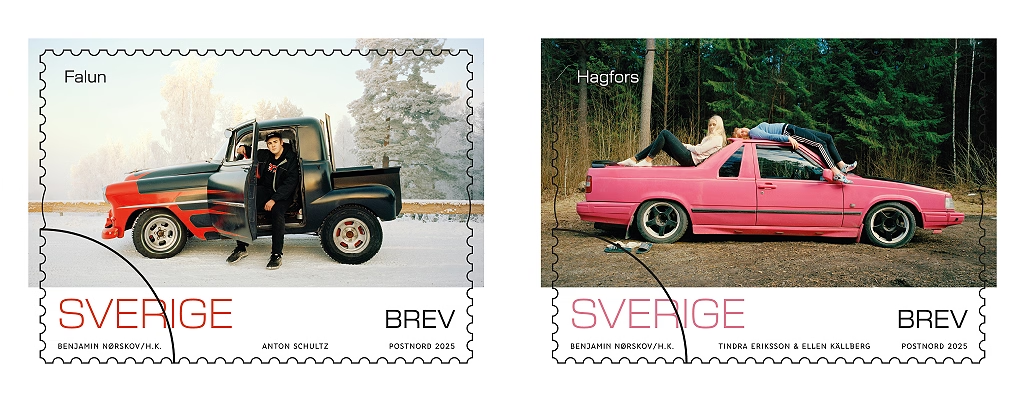
EPA owners made history in 2025 when they were documented on swedish stamps.
Because of loud music and parking lots where cars mixed with parties and alcohol, the “young people with vehicles” got a bad reputation. In Swedish they were called “raggare”. The word originally referred to coarse, rough fur, and later to uneven ground in the forest. The verb “ragga” meant that a forest worker pulled logs through rough terrain, and walking clumsily was called “ragla”. In many places, the rough ground eventually became a word for picking up the logs you had dragged there.
In English there is a similar development of the same root word. A “rag” is something worn and torn, and “rugged” means something that can handle more than usual. It is easy to think that it was the toughness of the EPA-tractor that gave its drivers their name. But it was the meaning “to pick up”, connected to forestry, that was behind it. The endless trips up and down the main street of a small town became a way to try to get girls to come along, in other words to pick them up. It was a negative word, but in the same way that people had taken on the cheap label EPA, they now took on “raggare”. The moral panic only made the label more attractive to the people it was aimed at, and it became part of their identity to stand outside mainstream society. The love for the countryside, which they felt that city people had always looked down on, became part of the culture. People were proud to drive a home-built tractor and have their party in a parking lot. Rock music was joined by music that was seen as low culture in the cities, and that was exactly its value: it would never be reviewed in the fine daily newspapers. The fact that the lyrics contained rude words was not only fun, it also kept opponents at a distance.
The music, which was first based on guitars, has today become more electronic and can sound like an adults-only eurodisco song from the 90s with a clear beat in 4/4 time. Together with the often massive speaker systems in the EPA-tractors, it hits as hard and as steady as a heartbeat, and for many young people it feels just as important for their survival during a few years of their lives.
Do you have something to add to this topic? Tell us your story.
Har du något att berätta om det här ämnet eller något annat du tror skulle passa på sidan? Skicka in din berättelse.